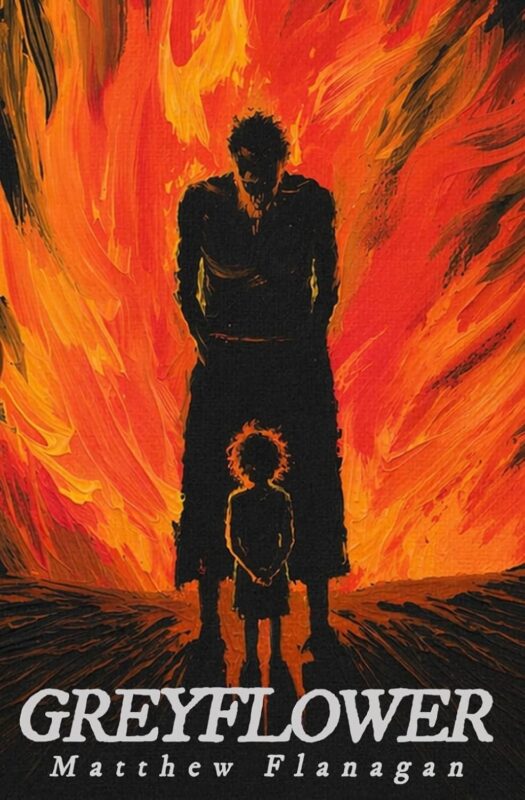
He gestured at the fire with the flask, like toasting it. "This," he said of the flames. He shook his head. "This ain't nothin."
It’s the Spring of 1945 and a naval pilot has gone down while training above the flatwoods of Florida’s east coast. His body is not found in the wreckage. Weeks go by, and as both the airbase personnel and the local citizens stage forest-sweeping searchlines, day after failed day, all rumors turn toward the obstinate old cattleman whose ranch was damaged by the crash. Carthal Greyflower, the last of a long lineage of Florida crackers, has allowed his family’s vast estate to decay back into wilderness, and whispers of his cultish tendencies have long graced the ears of many in the county.
The mystery is unravelled, not by the fumbling Yankee authorities, but by a young mirror of Greyflower, Case McCall, a teenager of mixed Mexican and Anglo heritage, who, like Carthal, sees the county’s growing population not as something to be celebrated, but as something very contrary to the soul of the once wild land.
Simultaneous to the county’s search for the pilot is Case’s search for his own sense of purpose, for his own pilot within. Born into violence, he’s been found throughout his life by loving friends and guardians—Eloise and Cammie Lambert, Brian and Abbey McCall—who’ve offered him an example of what sort of life is possible when the cycle of violence is broken. But tragedies and heartbreaks have kept him chained to this battle roiling constantly within him, between the satisfaction of hate and the sacrifice of compassion.
More than just the thrilling mystery of a missing pilot in the swamp, “Greyflower” is the story of an old world rotting in the woods, of a new civilization grown suffocating, and of a boy, born into violence but moved by hope, who must choose between the two.
“If they are the future,” the giant said, “then I won’t be a part of it. I will not destroy what I am to build what they will be.”

